By: Elizabeth Webb
In the decades following World War II, the American woman stood at the heart of a nation redefining itself. From the quiet strength of the home to the ever-expanding opportunities beyond it, women played a pivotal role in shaping modern America.
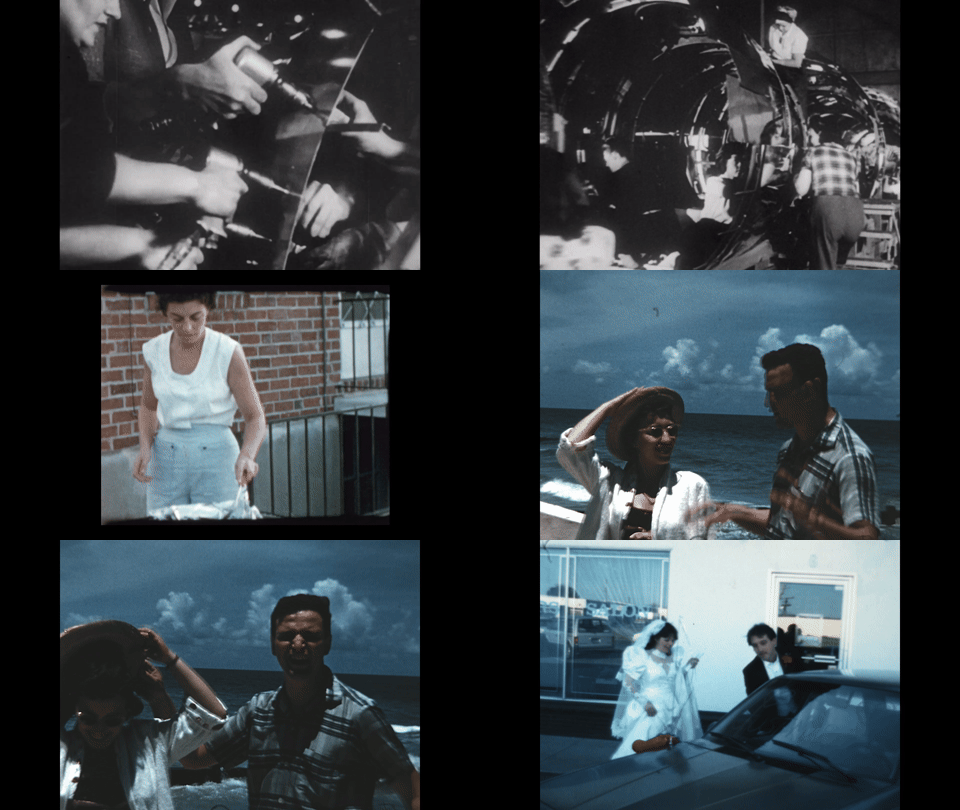
After WWII, millions of women who had stepped into fill roles in factories, offices, and farms returned to their homes. This transition was not a retreat or demotion, but a recommitment to nurturing strong families—the very foundation of a stable nation. While not every transition was easy, there was great relief to see their loved ones return home from war; the working woman was relieved to continue her duties at home. This was the era that saw a massive surge in birth rates and gave rise to the generation known as the “Baby Boomers”.

The 1950s the American woman was often characterized as a homemaker, but this title barely captures her influence. She managed the household budget, raised children with firm moral guidance, supported her husband’s ambitions, and cultivated a sense of order and pride in the home. If men were the head of the house, then women were the heartbeat. Their influence and care extended beyond their homes into the communities. Daily life revolved around family meals, church involvement, school activities, and neighborhood connections. These women were not passive participants in society—they were active builders of its moral and cultural framework.
The Winds of Change
The 1960s brought undeniable cultural shifts for the American woman. As America grappled with civil rights, political unrest, and changing social norms, women found themselves at a crossroads. It became more common for women to pursue higher education and careers, however, this era also introduced tensions. The rise of more radical feminist movements challenged traditional roles, sometimes portraying homemaking and motherhood as unimportant and unfulfilling rather than noble.
For many women, this was a difficult message to reconcile with the pride they took in their roles. While the movement began to help raise up women in the workforce, there was a tension of alienating a whole group of women with traditional values. These were women who quietly demonstrated that strength did not require abandoning tradition. Women balanced part-time work with raising children and contributed to their communities amid ever-changing societal norms.
Redefining Balance
By the 1970s and into the 1980s, the role of the American woman had undeniably expanded. More women entered the workforce, often out of financial necessity, but also out of a growing realization that they could enjoy success in the workforce as well as at home. As members of the Baby Boomer generation, these women became a powerful force in driving change.
Women were entering new fields of study, including law, finance, and the sciences, while also becoming teachers, nurses, secretaries, entrepreneurs, and community leaders. While some welcomed the integration of women into the workforce in diverse fields, there were many struggles for workplace fairness, both for white women and women of color. Many experienced pay inequality compared to male counterparts, which spurred activism for equality and has had a profound impact on women in the workplace in the 21st century.
Divorce became a more common cause of financial instability and generated a generation of “latch-key kids” for families, primarily for the first time. For others, a two-income family afforded more opportunities, including access to emerging technologies like microwaves and desktop computers.
They didn’t measure their contributions solely in paychecks but in the character of the generation they were raising and the strength of their communities. Still, for many women, the goal was not to replace the importance of family. They sought balance—working when needed while still maintaining a stable, loving home. The rise of dual-income households brought new challenges, but women met them with adaptability and perseverance.
Shaping a Nation
From 1945 through the 1980s, American women did more than adapt to change—they shaped it. They maintained the importance of family during times of upheaval, instilled in their children the values of hard work and integrity, and contributed to the workforce without losing sight of what mattered most.
Their legacy is evident in the America we know today: a nation built not only on economic and political achievements, but on strong families, resilient communities, and enduring values.
In today’s conversations about women’s roles, it’s important to remember that progress does not have to mean abandoning tradition. The women of the postwar era showed that strength can be quiet and bold, that influence can be rooted in the home and the workforce, and that true impact often comes from a steadfast commitment to faith, family, and country. They were not just witnesses to history; they were the ones who shaped it.

ABOUT THE AUTHOR
Elizabeth Webb is a Registered Nurse turned high school English teacher who loves to encourage other women to embrace the path they’ve been called to. She enjoys spending time with her family, chasing her kids to sporting events, being outdoors, and anything creative. She lives on a farm in the Midwest with her husband, three children, and dogs.