
By Jamie Oleka
How former school board member Tina Descovich turned a homemade website and a box of t-shirts with conviction into one of America’s most talked-about parent organizations.
When Tina Descovich launched Moms for Liberty in January 2021, her startup capital was roughly $500. She built the website herself, designed the branding, and set a deceptively simple goal: a presence in every county in Florida. Five years later, the organization she co-founded spans 48 states and more than 300 chapters, a scale most well-funded enterprises never reach.

For readers who care about how women build things, the most instructive part of the Moms for Liberty story isn’t its politics. It’s the entrepreneurship.
Descovich’s path began on a Florida school board, where she served from 2016 to 2020. That experience left her worried about education policy and what she saw as decision-making authority drifting away from parents. When she decided to act, she didn’t wait for funding or permission. She leaned in and learned as she went.
Early growth was organic and fast. Appearances on radio shows lifted the group’s visibility, and within weeks, the first out-of-state chapter formed, a sign that the demand she had tapped wasn’t local. From there, expansion ran less on paid marketing than on network effects: local media coverage, word of mouth, and parents who wanted to start chapters of their own.
The mission, as the organization frames it, is to unify, educate, and empower parents to defend parental rights in K–12 education. Just as important as the message is the structure. Moms for Liberty runs on a decentralized model: chapters operate within a defined scope but set their own local priorities, often beginning with something as concrete as reading school board agendas. That design, a clear mission paired with local autonomy, is what let the group scale without losing coherence.
Over time, the work climbed a ladder. It started with local school boards and district policies, expanded to state legislative committees in 2022, and now includes participation in national policy conversations. The group credits its members with helping pass more than 100 education-related bills across 22 states.
What should interest a business-minded reader is the transition now underway. The founder-led, informal early days have given way to structured systems, hires in areas such as fundraising and operations, and strategic planning that ties goals to spending. For Descovich, fundraising and financial stewardship have become leadership disciplines in her own right rather than afterthoughts. It is the same arc nearly every growing venture faces: the move from scrappy startup to sustainable institution.
Descovich’s leadership lessons travel well beyond her cause. Parents, especially mothers, are extraordinarily motivated when an issue touches their children, she observes, and that energy becomes fuel when it is paired with clear mission alignment and genuine community. Her central insight is also the simplest: a strong enough desire can compensate for a lack of experience or money. You don’t need a war chest to begin; you need conviction and a willingness to learn. It is a message with obvious resonance for any woman weighing whether her idea is fundable before it is even built.
The human results surface in unexpected places. First-time speakers have become public advocates. Chapter leaders have stepped into political roles. Members who had never engaged with governance found themselves shaping state policy. The organization has functioned as a leadership incubator, building confidence and skills in women who didn’t know they had them.
The ambition now is audacious: a chapter in all of the country’s roughly 3,000 counties, underpinned by the organizational sustainability and professional fundraising that long-term influence demands.
Asked what she would tell an aspiring founder, Descovich’s answer is refreshingly unglamorous. Commitment matters more than capital. Start small. Learn as you go. Use the tools already within reach. And build your community early, because a movement, like a business, is ultimately a group of people who believe in what you are building.
For any woman sitting on an idea and waiting for the money to feel right, that may be the most valuable return of all.
ABOUT THE AUTHOR
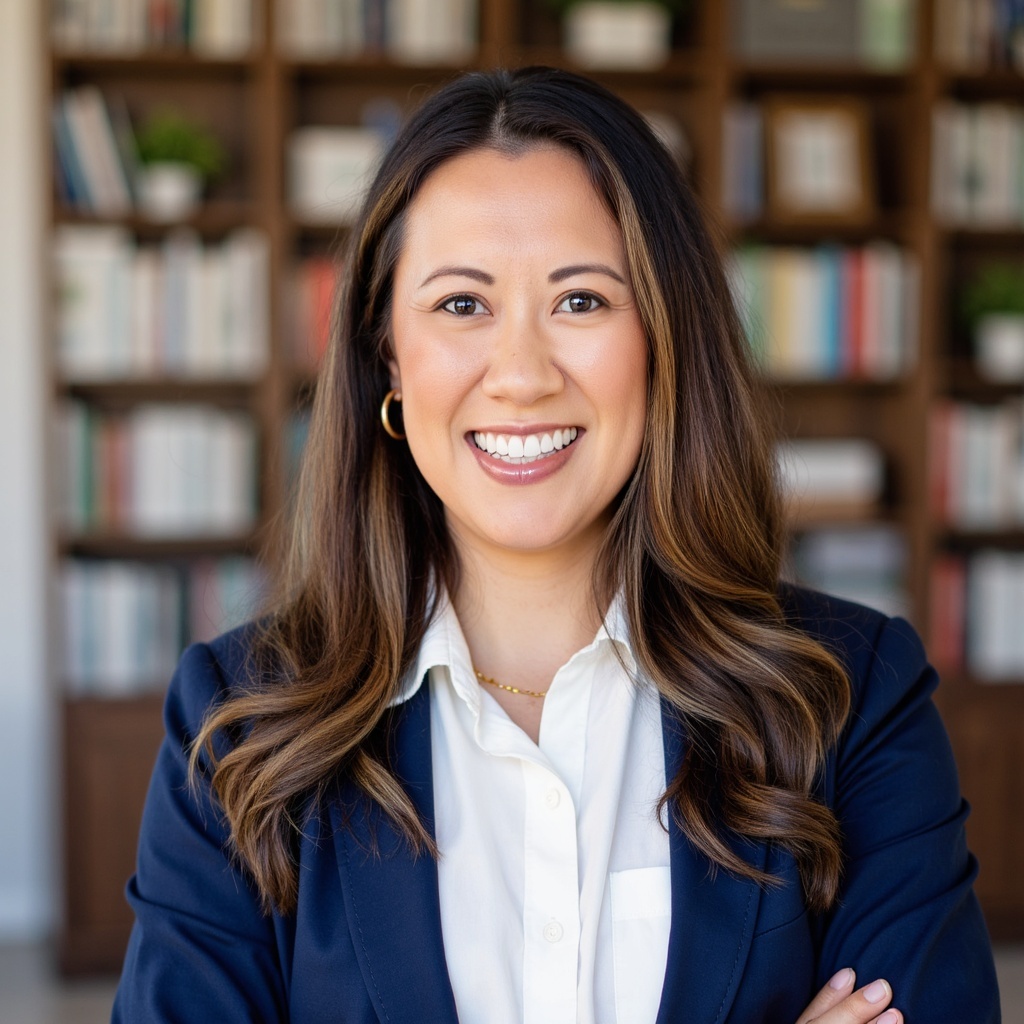
Jamie Oleka, a wife, mom, and a passionate advocate for debt free quality education, has extensive experience in K-12 and nonprofit management having most recently served as a Managing Director at Teach For America. Jamie holds a Masters of Education in Instructional Accommodations from Francis Marion University, Masters of Arts in Teaching, and Ed.S. in K-12 Administration from the University of Louisville.