
By Maggie Murphy
In the late 1800s, my great-grandmother, Dessa Hagee Roche, the daughter of one of General Sherman’s “Boys in Blue,” traveled from Texas to Colorado by horse-drawn wagon as a young girl. After they reached Denver, tragedy struck; Dessa lost all of her siblings within a few weeks. Two years later, hope returned to the home when a little sister was born. On March 3, 1896, Gladys Rebecca Hagee arrived early, weighing only 4 pounds with a rupture in her lower abdomen. Her father crafted a homemade incubator using parts from the bread warmer on the wood stove to keep her alive.
Family, Church, and Local Community
In the early stages of organizing and researching this story, I found guidance from a history lecture heard over 30 years ago. During my first semester at Hillsdale College, Dr. John Willson encouraged our American Heritage class to view much of our country’s history through the lens of “Family, Church, and Local Community.” Gladys’ early music education demonstrates this American tradition. Her first exposure to music included informal front porch sessions where she learned folk tunes like “Froggie went a Courtin’” accompanied by her father on the harmonica. In addition to music in the home, Gladys learned religious hymns each Sunday at church and received informal instruction from the organist. Gladys also found early vocal performance opportunities in homes throughout the Denver community.

This foundation laid the groundwork to continue formal music education at the University of Colorado-Boulder, where Gladys met Steere de Montfort Mathew. They married in New Orleans and settled in New York City, where Gladys pursued an opera career, and Steere became a pioneer in radio, helping to organize NBC’s first nationwide broadcast. My siblings and I used to play with an old xylophone from the studio that chimed the familiar “N-B-C” sound you still hear on TV today.
Gladys’ early professional music career included some memorable collaborations in 1920s New York, including a Saturday night gig singing jazz at Delmonico’s with an orchestra led by a young clarinetist named Benny Goodman. Her opera career took her to New York, Washington, Boston, and even Europe, where she performed at the Salzburg Festival and the Opera in Bratislava. Later, Gladys and Steere, with help from the Town Hall Club, formed Community Opera, Incorporated of New York, creating a space for amateur musicians to learn and perform opera. Similar programs are now found throughout the United States.

Steere also inherited the Mathew family estate in England. The Mathew family has a long, distinguished history in England, going back to Simon de Montfort, the father of the British Parliament. In 1939, Gladys lived in Ipswich, England, for six months to organize the collection of documents and antiques for transit to New York. During this time, Steere joined her for a month to tour locations important to his heritage, including Pentlow Hall in Essex, which was built in the 1400s and home to the Mathew Family during much of the 1800s.
Living with History

Gladys and Steere bequeathed the contents of their Upper West Side brownstone to their grandnephew, my father. In the summer of 1981, my mother, siblings, and I spent two weeks in Manhattan, packing up the antiques and historical documents and having many adventures in Central Park. My mother spent the rest of her life preserving the collection. My siblings and I grew up living among this history: Holding court in Tudor chairs, fencing with antique foils, and granting knighthood with Lt. Colonel Henry Mathew’s cavalry sword till my mother frantically rushed out and demonstrated the sharp edge.
Much of the collection has been dispersed over the years, with many pieces going to members of the community, young couples furnishing their first homes, and donations to charity auctions. A portion of the collection has been preserved at our farm and developed into a 2026 lecture and traveling exhibit. More recently, I have been in contact with a historian and ecclesiologist in England to arrange the return of the Mathew family’s historical documents, a collection that dates back to the 1700s.
Sharing your Story

Gladys’ story, which influenced the lives of multiple generations of my family, is part of America’s storybook. As our country celebrates its 250th birthday, now more than ever we need to examine our history. Exploring where we fit in this grand, complicated American experiment can help us understand who we are and where we’re going.
Are you the keeper of your family’s history, but unsure how to begin sharing it with the next generation? Dr. John Willson offers a simple starting point: “That’s where it starts. History is stories.” Begin with the stories that matter most, and shape them through the lens of family, church, and local community.
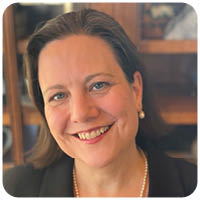
ABOUT THE AUTHOR
Maggie Murphy is a lifelong Michigander and graduate of Hillsdale College. She is an enthusiastic educator with 29 years’ experience helping community college students reach their academic and career goals. Maggie is also the author of the children’s book, Sara Dippity, and can often be found performing Irish, Scottish, and Americana folk music and running a small farm with her husband.